Section 1: Basic Understanding and Core Clarity
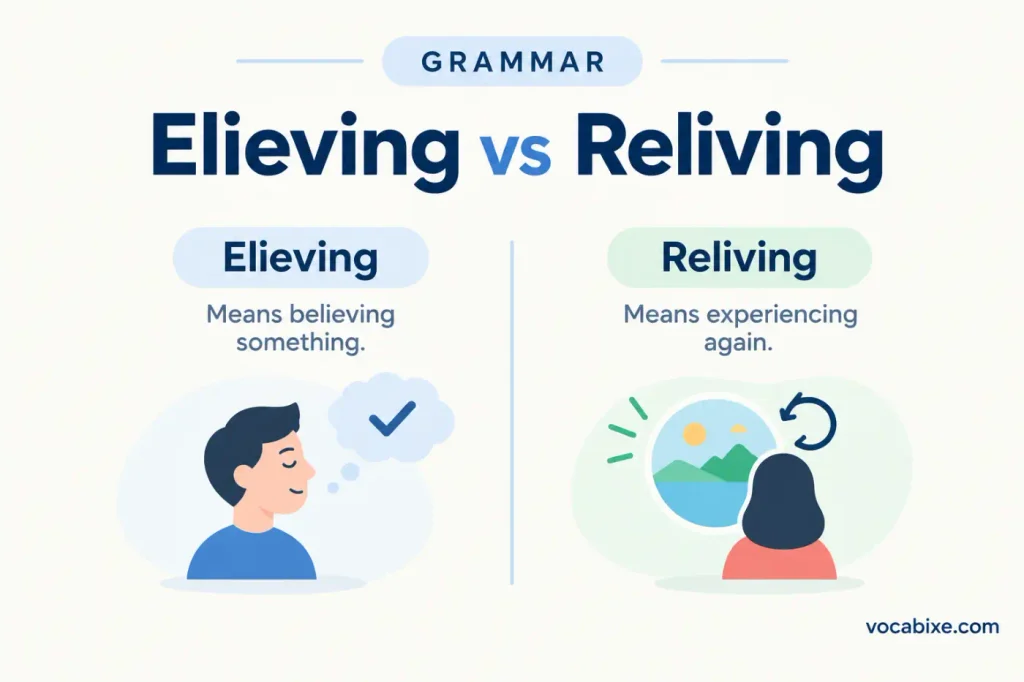
If you searched for elieving vs reliving, you are probably wondering which spelling is correct. The answer is simple: reliving is a correct English word, while elieving is usually a misspelling. The word reliving means experiencing a past event, memory, or feeling again.
For example, you might say, “She was reliving her childhood memories.” Here, reliving means going through those memories again in your mind. The word is formed from re- and living, but the spelling can be confusing.
In this guide, you will learn the difference between elieving and reliving, why people make this spelling mistake, how to use reliving correctly, and how the word appears in everyday English. You will also see simple examples that make the spelling easy to remember.
Simple Answer in One Look
The correct spelling is reliving.
Reliving means experiencing something from the past again, especially in your mind or emotions. Elieving is not the standard spelling of this word.
- Correct: reliving
- Incorrect: elieving
- Meaning: experiencing or remembering something again
Example:
He felt like he was reliving the same moment again.
What Does “Elieving vs Reliving” Mean?
The search phrase elieving vs reliving compares two spellings that look similar.
The main point is that these are not two normal forms of the same English word. Reliving is the standard word you want when you mean experiencing something again.
What Does Reliving Mean?
Reliving means experiencing something from the past again.
This can happen in your mind. You may remember an exciting trip, a difficult day, a family event, or an important moment. When that memory feels very real again, you can describe it as reliving the experience.
For example:
I was reliving my first day at school.
The person is not actually going back to school. They are remembering the experience so strongly that it feels like they are experiencing it again.
What About Elieving?
Elieving is generally not the correct spelling for this meaning.
If you want to write about experiencing a past event again, use reliving.
Wrong:
I was elieving the happy moment.
Correct:
I was reliving the happy moment.
What Is the Correct Spelling?
The correct spelling is reliving.
It comes from the verb relive.
The basic pattern is:
relive → reliving
Notice something important here. The final e in relive is removed before -ing is added.
So:
- relive → reliving
- revive → reviving
- survive → surviving
- arrive → arriving
This spelling pattern can help you remember the word. process vs in-progress is must view article.
Why Is There No “E” After Reliv?
You may wonder why we do not write reliveing.
English usually drops the final silent e when a verb ending in e takes -ing.
So:
- live → living
- love → loving
- move → moving
- make → making
- relive → reliving
That is why reliving is the correct spelling.
What Is the Difference Between Elieving and Reliving?
The difference is very simple.
Reliving is the correct English word. It means experiencing something from the past again.
Elieving is normally a spelling error. It does not serve as the standard spelling for this meaning.
Think of the difference this way:
| Spelling | Standard English? | Meaning |
|---|---|---|
| reliving | Yes | Experiencing something again |
| elieving | No, usually a misspelling | Not the standard word |
Reliving
Use reliving when someone remembers or experiences a past event again.
Example:
He was reliving his best football match.
Elieving
Avoid elieving when you mean reliving.
Example:
Incorrect: She was elieving her childhood memories.
Better:
Correct: She was reliving her childhood memories.
Why Do People Get Confused?
There are several reasons people may write elieving instead of reliving.
1. The Word Is Not Easy to Hear
When people hear “reliving,” the first sound can be easy to miss.
The word can sound like it starts quickly with the main part of the word. If someone has never seen it written, they may guess the spelling.
2. English Has Many Similar Words
English contains many words with similar sounds and endings.
For example:
- living
- leaving
- reliving
- relieving
These words can cause confusion.
3. Reliving and Relieving Look Similar
This is a bigger source of confusion.
Reliving and relieving are both correct words, but they have different meanings.
Reliving means experiencing something again.
Relieving means making pain, stress, pressure, or a problem less severe.
Compare:
She was reliving the memory.
The medicine was relieving his pain.
One letter changes the meaning.
4. Typing Quickly
People often make spelling mistakes while texting or typing quickly.
A person may type elieving because the first part of reliving is missed.
This does not change the correct spelling.
Which One Should You Use?
Use reliving when you mean experiencing a past event, memory, or feeling again.
A simple rule is:
Past experience again = reliving.
Examples:
I am reliving that wonderful vacation in my mind.
She was reliving her childhood.
He keeps reliving the moment he won the game.
Do not use elieving for this meaning.
Reliving vs Relieving: Do Not Mix Them Up
This comparison is useful because relieving is also a real word.
Reliving
Reliving = experiencing something again.
Example:
I am reliving my school memories.
Relieving
Relieving = reducing pain, stress, pressure, or difficulty.
Example:
This medicine is relieving my headache.
Another example:
Talking to a friend was relieving my stress.
The easiest memory trick is:
Reliving = living again.
Relieving = making something less painful or difficult.
Easy Examples in Real Sentences
Here are some simple examples using reliving.
- I was reliving my childhood memories.
- She enjoyed reliving her wedding day through old photos.
- He kept reliving the final goal in his mind.
- We were reliving our funny travel stories.
- The movie made me feel like I was reliving my school days.
- She spent the evening reliving happy family moments.
- He was reliving the experience while looking at the pictures.
- I love reliving old memories with my friends.
These examples show that reliving often appears with words such as memories, moments, experiences, childhood, and past events. Our last article amateur vs amatuer.
How Is “Reliving” Used in a Sentence?
The word reliving usually describes something happening again in a person’s memory or experience.
Here are common patterns:
This is reliving a memory
She was reliving an old memory.
reliving an experience
He felt like he was reliving the experience.
This is a reliving a moment
The photo brought him back to the moment he was reliving.
reliving the past
He did not want to keep reliving the past.
The word can describe happy experiences, sad experiences, exciting moments, or difficult memories.
Common Mistakes to Avoid
Mistake 1: Writing “elieving”
Incorrect:
I was elieving my childhood.
Correct:
I was reliving my childhood.
The word needs the r at the beginning.
Mistake 2: Writing “reliveing”
Incorrect:
She is reliveing the memory.
Correct:
She is reliving the memory.
The final e in relive is dropped before -ing.
Mistake 3: Using “relieving” for memories
Incorrect:
I am relieving my childhood.
Correct:
I am reliving my childhood.
Relieving has a different meaning.
Mistake 4: Thinking Reliving Means Going Back in Time
Reliving does not usually mean physically traveling into the past.
It often means remembering or feeling a past experience again.
Looking at my old photos made me feel like I was reliving my childhood.
The person is still in the present.
Where Does the Word “Reliving” Come From?
The word reliving comes from the verb relive.
The word can be understood as:
re- + live
The prefix re- often carries the idea of doing something again.
So relive can be understood simply as live again.
In everyday use, however, reliving normally refers to experiencing a past event again in your memory, thoughts, or feelings.
The word live itself has a very old history in English. It has been part of the language for many centuries. The prefix re- has also long been used to show repetition.
The spelling reliving follows the normal English spelling pattern of dropping the final silent e before adding -ing.
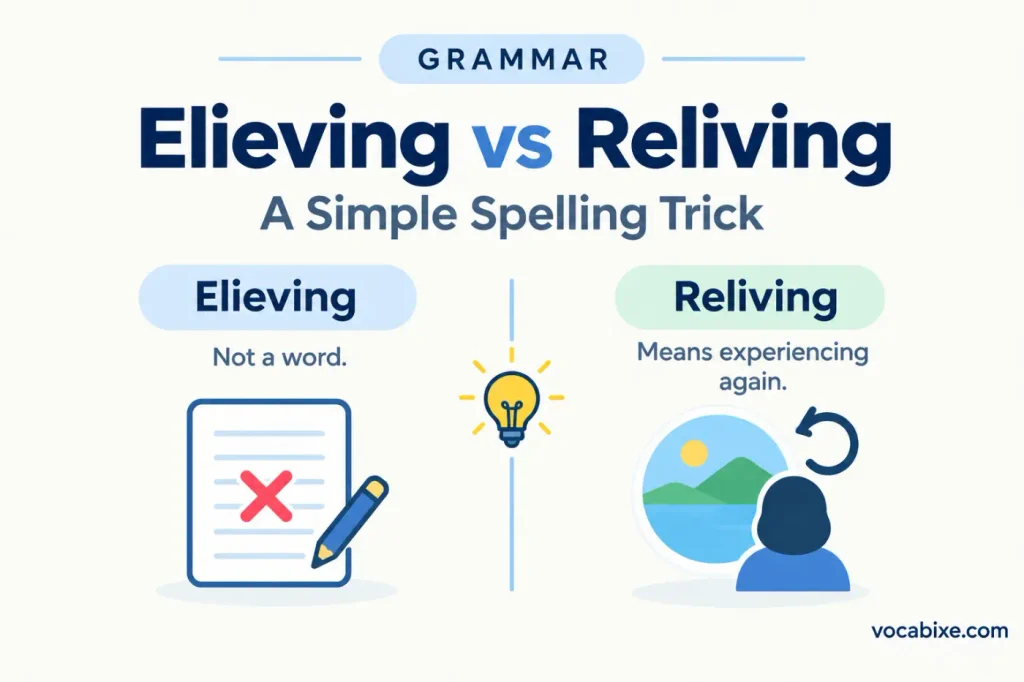
A Simple Spelling Trick
If you are unsure about elieving vs reliving, use this trick:
Think of the base word:
relive
Now remove the final e:
reliv
Add -ing:
reliving
You can also remember the meaning:
reliving = living something again
That small memory trick can help you avoid the spelling mistake.
The basic idea is now clear. Reliving is the correct word, but its meaning becomes even easier when you see how people use it to talk about memories, stories, emotions, and past experiences.
Section 2: Deep Meaning, Culture, and Practical Use
How Is “Reliving” Used in Real Life?
Native English speakers commonly use reliving when talking about the past.
The word often appears in conversations about memories.
For example, friends may look at old photos and say:
We are reliving our college days.
Someone may watch an old sports match and say:
Watching this game feels like reliving that amazing night.
A family may talk about a holiday from years ago:
We spent the evening reliving our vacation memories.
The word works well in both everyday speech and writing.
In Conversations
You might hear:
I love reliving old memories.
That song has me reliving my childhood.
We were just reliving the good old days.
These sound natural and casual.
In Writing
The word can also appear in stories, articles, books, and personal writing.
For example:
The old photograph brought back memories of her childhood, making her feel as if she were reliving those days.
This use is more descriptive, but the basic meaning stays the same.
In Social Media
People sometimes use reliving when posting old photos or videos.
For example:
Reliving this amazing trip!
Or:
Reliving the best summer of my life.
These short phrases are common in informal online writing.
What Does Reliving Mean Emotionally?
Reliving can be more than simply remembering.
When you remember something, you may only think about it.
When you feel like you are reliving it, the memory may feel very strong.
You might remember:
- what happened
- what people said
- how you felt
- what the place looked like
- what you heard
- why the moment mattered
For example, looking at an old family picture may make you remember a birthday party.
You are not actually back at that party. However, the memory may feel so clear that you describe the experience as reliving the moment.
Can Reliving Be Positive or Negative?
Yes.
Reliving can describe happy memories.
She was reliving the happiest day of her life.
It can also describe difficult experiences.
He kept reliving the frightening event in his mind.
It can describe exciting experiences too.
The fans were reliving the team’s historic victory.
So the word itself is neutral. The feeling depends on the event being remembered.
How Is the Word Used in Stories?
Writers often use reliving when they want readers to understand that a character is strongly connected to the past.
For example:
As he opened the old box, he felt as if he were reliving his childhood.
This creates a picture in the reader’s mind.
The character sees something from the past. That object brings back strong memories.
The word can therefore help connect the present with the past.
How Is Reliving Understood in Culture and Stories?
Many cultures value memories and stories about the past.
Families often tell stories about childhood, holidays, celebrations, school days, and important family events.
When people share these stories, they may feel as if they are going through those moments again.
English speakers often use reliving for this idea.
For example:
Grandpa enjoyed reliving his childhood stories with the family.
This does not mean Grandpa became a child again. It means he remembered those experiences and talked about them again.
Movies and books also use this idea. A character may find an old photograph, hear a familiar song, or visit an old place. That experience may bring back strong memories.
Biblical and Mythological Meaning
There is no special biblical or mythological meaning attached to the spelling reliving itself.
The word can appear when people describe experiences or memories in a general way, but reliving is not a special biblical term or mythological symbol.
It is best to understand the word through its normal English meaning: experiencing something again, often through memory or emotion. Popular article society synonym.
Symbolism Explained in Simple Words
Reliving can sometimes have a symbolic meaning in stories, but the meaning depends on the context.
What the Word Can Represent
In a story, reliving may represent:
- memory
- the connection between past and present
- regret
- happiness
- nostalgia
- personal growth
For example, a character who keeps reliving an old mistake may be struggling to move forward.
Another character may relive happy childhood memories because those memories give comfort.
How the Meaning Changes by Context
The word does not always carry the same emotional message.
Consider these two sentences:
She was reliving her happiest childhood memories.
This sounds warm and positive.
Now consider:
He was reliving the painful experience every night.
This sounds difficult.
The spelling and basic meaning are the same. The surrounding words change the emotional meaning.
Related Words You Should Know
Learning a few related words can make reliving easier to understand.
Relive
Relive means to experience something again, often through memory.
I relive that moment whenever I see the photo.
Relived
Relived is the past form of relive.
She relived her childhood through old videos.
Reliving
Reliving describes the action of experiencing something again.
He is reliving the memory.
Memory
A memory is something you remember from the past.
I have a happy memory of that trip.
Remember
Remember means to bring something from the past back into your mind.
I remember my first teacher.
Recall
Recall means to remember something.
I can recall that conversation clearly.
Reexperience
Reexperience means to experience something again.
It is less common in everyday speech than relive.
Nostalgia
Nostalgia is a warm or sometimes sad feeling about the past.
The old song filled her with nostalgia.
How to Use “Reliving” Correctly
Use reliving when the idea is that someone is experiencing a past event again.
A useful sentence pattern is:
Subject + is/was + reliving + past experience
Examples:
She was reliving her childhood.
He is reliving the final moments of the game.
They were reliving their vacation memories.
Another common pattern is:
feel like + reliving
I feel like I am reliving my school days.
You can also use the word after verbs such as keep, enjoy, or love.
He keeps reliving the same memory.
She loves reliving old family stories.
When Should You Not Use “Reliving”?
Do not use reliving when you mean reducing pain or stress.
For that meaning, use relieving.
For example:
The medicine is relieving my pain.
Not:
The medicine is reliving my pain.
Also, do not use reliving simply to mean remembering every time. The word can suggest a stronger experience than ordinary remembering.
Compare:
I remember my first day at school.
This simply states that you remember it.
I am reliving my first day at school.
This suggests that the memory feels vivid or powerful.
Reliving vs Remembering
These words are related, but they are not exactly the same.
Remembering is a broad idea. It means bringing something from the past to mind.
Reliving can suggest that the past experience feels active or vivid again.
Example:
I remember our family trip.
This is a simple statement.
I am reliving our family trip through these photos.
This suggests the photos make the experience feel real again.
That is why reliving can sound more emotional than simply remembering.
Real-Life Usage Examples
Here are more examples that show natural uses of reliving.
At Home
Mom was reliving funny stories from her childhood.
At School
The teacher was reliving her favorite school memories.
After a Trip
Looking at our vacation photos made us feel like we were reliving the trip.
After a Sports Game
The fans were reliving the team’s big win.
With Friends
We stayed up late reliving our funniest college memories.
With Family
Grandpa enjoys reliving stories from his younger days.
While Watching a Movie
That movie made me feel like I was reliving my childhood.
Looking at Old Photos
I spent the afternoon reliving old memories.
Listening to Music
That song has me reliving my teenage years.
Talking About an Important Moment
She was reliving the moment she received the good news.
Notice how the word often connects the present with something that happened before.
Common Questions People Have
People who search for elieving vs reliving may also confuse the word with relieving, leaving, or living.
Here is a quick guide.
Reliving means experiencing something again.
Relieving means reducing pain, stress, pressure, or difficulty.
Leaving means going away from a place.
Living means being alive or making your home somewhere.
Examples:
I am reliving an old memory.
The medicine is relieving my pain.
She is leaving the house.
They are living in Texas.
These words may look or sound similar, but their meanings are very different.
Pronunciation of Reliving
Reliving is pronounced with the idea of re-live-ing.
The word contains the base word live.
This can help you connect the spelling to the meaning.
Remember:
relive → reliving
Do not add an extra e before -ing.
Is Reliving Formal or Informal?
Reliving can be used in both everyday and formal English.
In casual speech:
We were reliving the good old days.
In more formal writing:
The photographs allowed the family to relive important moments from the past.
The word itself is not slang. It is a normal English word.
Is Reliving an American or British Word?
Reliving is used in both American and British English.
There is no major American-versus-British spelling difference for this word.
Whether you are writing for an American or British reader, reliving is the standard spelling.
Can Reliving Be Used for Physical Experiences?
Yes, but the word is especially common for memories and past experiences.
For example:
The actor felt like he was reliving the scene.
This can mean the actor felt as though the earlier experience was happening again.
The word can also be used for events:
The crowd was reliving the historic victory.
Again, the idea is experiencing the past again in some way.
Can You Say “Reliving the Past”?
Yes.
Reliving the past is a natural English expression.
Example:
He spent years reliving the past.
It means he kept returning to past experiences in his thoughts or feelings.
The phrase can be positive or negative depending on the context.
She enjoyed reliving the past with her old friends.
This sounds positive.
He could not stop reliving the painful past.
This sounds negative.
Can You Say “Reliving Memories”?
Yes.
Reliving memories is a natural phrase.
Example:
We spent the evening reliving old memories.
You can also say:
- reliving childhood memories
- reliving happy memories
- reliving painful memories
- reliving old memories
- reliving special memories
These combinations are common and easy to understand.
A Quick Way to Remember the Spelling
If you often type elieving, remember the first letter.
The word is:
R + eliving = reliving
But an even better trick is to connect the word to its meaning.
Reliving = living again.
The word starts with re- because it describes doing or experiencing something again.
Then remember the spelling rule:
relive + ing = reliving
Not:
reliveing
This gives you two simple ways to remember the correct form.
Final Teacher Explanation
If I were explaining elieving vs reliving to a student in class, I would give one simple answer:
Use reliving.
The word reliving means experiencing something from the past again. It can happen through a memory, a story, a photograph, a song, or a strong feeling.
Elieving is normally a spelling mistake. If you mean “experiencing again,” write reliving.
Also remember the difference between reliving and relieving. Reliving is connected to memories and past experiences. Relieving is connected to reducing pain, stress, pressure, or problems.
The spelling becomes easy when you remember the base word:
relive → reliving
The final e disappears before -ing.
Final Answer — Quick Recap
The correct spelling is reliving, not elieving, when you mean experiencing a past event or memory again.
Reliving = living or experiencing something again. For example, “I am reliving my childhood memories.”
Do not confuse reliving with relieving. Relieving means making pain, stress, or difficulty less severe.
The easiest way to remember the spelling is relive → reliving. Once you connect the word with the idea of “living again,” the correct spelling becomes much easier to remember.
When you write about memories, past experiences, old stories, or powerful moments, reliving is the word you need. It works naturally in everyday conversations, school writing, stories, and online posts.
A spelling mistake like elieving is easy to make because several English words look and sound similar. However, a quick check of the base word relive can help you choose the right form every time.
FAQs
Frequently Asked Questions
What is the correct spelling, elieving or reliving?
Reliving is the correct spelling when you mean experiencing a past event or memory again. Elieving is usually a spelling mistake.
What does reliving mean in simple English?
Reliving means experiencing something from the past again, often through a strong memory or feeling.
Is reliving a real English word?
Yes. Reliving is the standard form of relive when adding -ing.
Why is elieving incorrect?
Elieving is not the standard spelling for the meaning “experiencing again.” The correct word is reliving.
What is the difference between reliving and relieving?
Reliving means experiencing something again. Relieving means reducing pain, stress, pressure, or difficulty.
How do I use reliving in a sentence?
You can say, “Looking at old photos made me feel like I was reliving my childhood.”
Is reliving used in American English?
Yes. Reliving is a normal word in American English and is also used in British English.
Is “reliveing” correct?
No. The correct spelling is reliving. The final e in relive is dropped before -ing.
Pingback: Onsite vs On Site: Clear Difference Explained Simply - Vocabixe
Pingback: How Tos or How To's? Correct Spelling and Usage Explained 2026 - Vocabixe