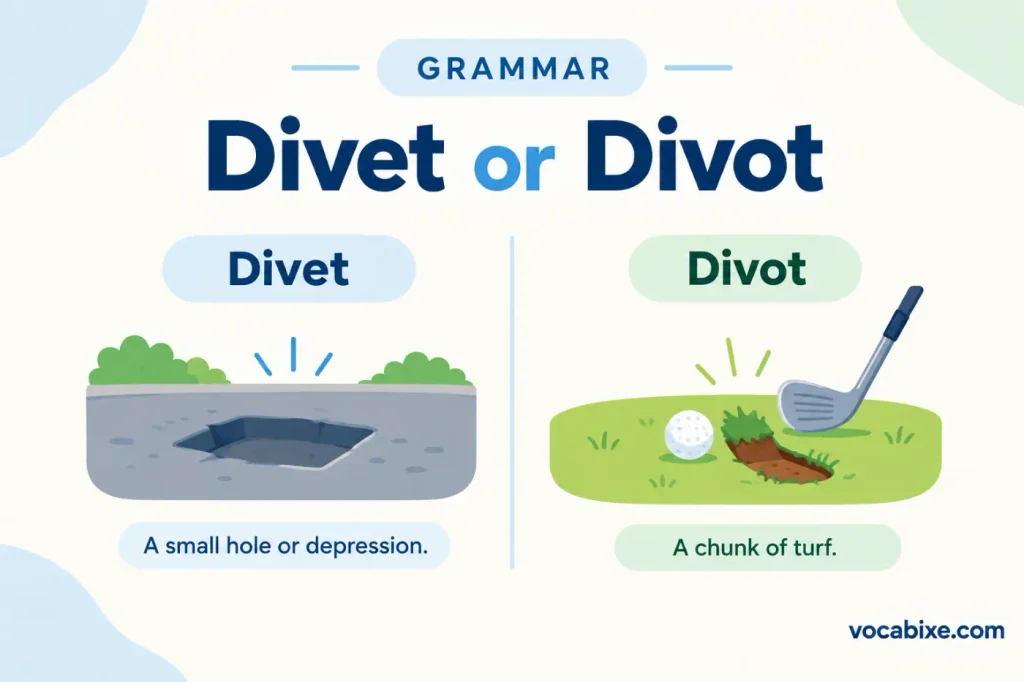
If you have ever written this word and paused to wonder if it looks right, you are not alone. Many people type divet, and many others type divot, and both feel like they could be correct. The truth is simple. Divot is the correct spelling. Divet is a common misspelling that shows up in casual writing, texts, and even some online posts.
This word usually comes up when people talk about golf, gardening, or a small patch of grass or ground that has been torn up. It looks like a small, simple word, but it trips up a lot of writers because of the way it sounds when spoken quickly.
In this lesson, you will learn the correct spelling, the real meaning, why so many people get it wrong, and how to use the word the right way in your own writing.
Simple Answer in One Look
The correct spelling is divot. Divet is not a real word in standard English dictionaries, even though it is a very common typing mistake. A divot is a small piece of grass or turf, along with the dirt attached to it, that gets torn out of the ground. The main reason people confuse the two spellings is the ending sound. The “ot” at the end of divot can sound like “et” when people say the word fast, so writers sometimes spell it the way it sounds instead of the way it is actually written. Related lieing or lying.
.
What Does Divot Mean?
A divot is a small chunk of grass and soil that comes loose from the ground. This usually happens because of pressure, digging, or impact. Think about a golf club hitting the ground during a swing. The club often rips up a small patch of grass. That torn-up patch is called a divot.
The word can also describe any small dent or hole left behind after something is removed or pulled away from the surface of the ground. For example, a heavy boot heel can leave a divot in soft mud. A shovel can leave a divot in a lawn. Even a chair leg dragged across grass can leave a small divot behind.
In everyday language, people also use divot in a more relaxed way to describe any small dip, dent, or rough patch on a lawn, field, or path. This is why the word shows up so often in conversations about sports, yard work, and outdoor spaces.
What Is the Correct Spelling?
Divot is the only accepted spelling in standard American and British English. You will not find divet listed as a correct or alternate spelling in trusted dictionaries. Even so, divet appears often online because people are spelling the word based on how it sounds rather than how it is written.
Here are a few examples that show the difference clearly.
- Correct: He hit the ball and left a large divot on the green.
- Incorrect: He hit the ball and left a large divet on the green.
- Correct: Please repair the divot before you walk away.
- Incorrect: Please repair the divet before you walk away.
If you remember one simple fact, you will never mix this up again. The word ends in “ot,” just like plot, spot, and knot.
Why Do People Get Confused?
The confusion between divet and divot comes from a few common reasons.
- The word is often spoken quickly, especially during sports commentary, so the ending sound gets blurred.
- Many English words that end in “et” are extremely common, such as basket, ticket, and pocket, so writers automatically lean toward that pattern.
- Divot is not a word most people write often, so there is less natural memory built around its spelling.
- Autocorrect on some devices does not always catch the mistake, especially if the writer types quickly.
- Regional accents can make the final syllable sound softer, which adds to the confusion.
None of these reasons mean the writer made a careless mistake. They simply show how natural it is for the brain to guess a spelling based on sound patterns instead of the actual written form.
Which One Should You Use?
The rule here is simple and easy to remember.
Use divot when you are talking about a small piece of grass, turf, or ground that has been torn up or displaced.
Do not use divet in any situation, since it is not a recognized word in standard English.
If you ever feel unsure while writing, picture a golf course. Golfers talk about divots all the time, and picturing that image can help you remember the correct spelling instantly.
Easy Examples in Real Sentences
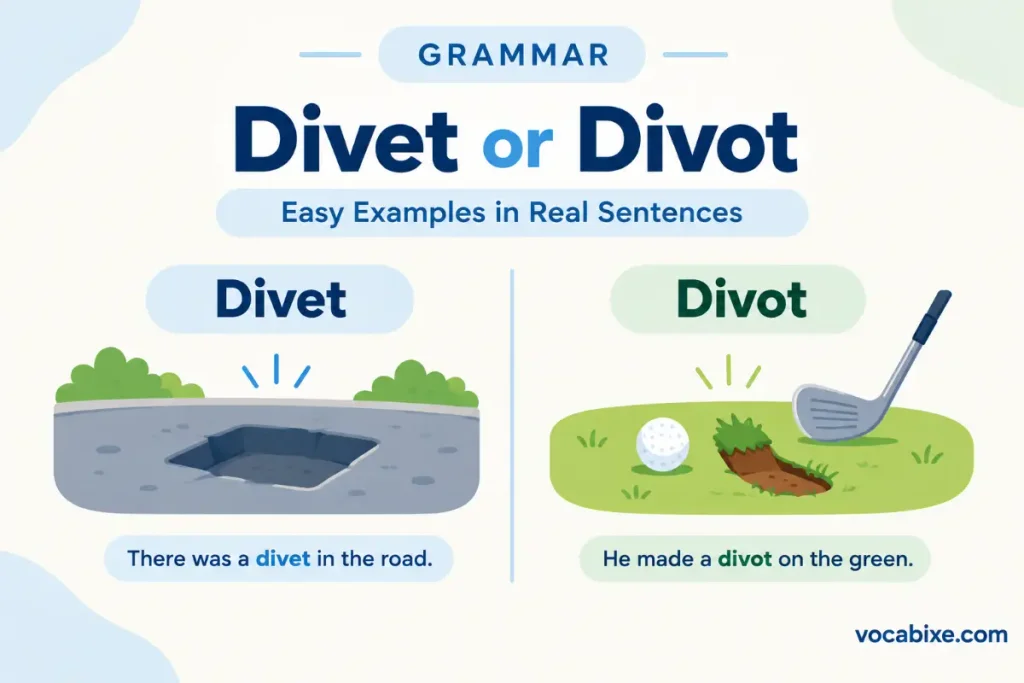
Here are several natural examples that show how divot is used in everyday English.
- The golfer forgot to fix his divot before moving to the next hole.
- There was a small divot in the backyard where the dog liked to dig.
- Coach asked the players to stay off the field because of all the divots.
- My uncle stepped in a divot and almost twisted his ankle.
- The groundskeeper filled in every divot before the big game.
- I sent my brother a text asking him to fix the divot he left on the lawn.
- Our neighborhood park has a few rough patches with deep divots near the goalposts.
- She pointed out a divot near the flowerbed and asked who made it.
Each of these examples shows the word used in a normal, natural way, the kind you would hear in daily conversation.
Common Mistakes to Avoid
Many writers make the same small mistakes with this word. Here are the most common ones.
- Incorrect: divet Correct: divot Reason: Divet is simply a misheard or mistyped version of divot.
- Incorrect: He left a big divett on the field. Correct: He left a big divot on the field. Reason: Adding extra letters does not create a real spelling.
- Incorrect: The dievot in the yard needs fixing. Correct: The divot in the yard needs fixing. Reason: This is a simple letter-order mistake that happens when typing fast.
Avoiding these small errors will make your writing look more polished, especially in emails, articles, or any content meant for a wider audience.
Where Does the Word Come From?
The word divot comes from an old Scottish term, believed to be linked to a Scots word for a piece of turf. Over time, English speakers adopted the word to describe any small chunk of grass or soil that gets torn from the ground.
Golf played a major role in spreading the word into everyday English. Since golf became popular across many English-speaking countries, terms from the sport slowly moved into common language. Divot is one of those words that started in a specific setting and grew into something people use in gardening, sports, and casual conversation.
The exact origin is not fully confirmed by historians, but the Scottish connection is the most widely accepted explanation.
Now that you understand the meaning and the correct spelling, it helps to look at how this word fits into real conversations, sports culture, and daily routines. Seeing the word in a wider context makes it easier to remember and easier to use with confidence.
How Is This Word Used in Real Life?
People use the word divot most often in a few specific settings.
In sports, especially golf, players and commentators mention divots constantly. A golfer’s swing often digs into the grass, and fixing that spot afterward is considered good manners on the course.
In gardening and lawn care, homeowners talk about divots when describing damage from foot traffic, tools, or heavy furniture.
Inside everyday conversation, people sometimes use divot loosely to describe any small dent or rough spot on the ground, even outside of sports or yard work.
In writing, whether it is a blog post, a news article, or a text message, divot appears whenever someone needs to describe a torn patch of grass or a small dip in the ground.
The word rarely appears in formal or academic writing, since it describes a very specific physical object. Still, it fits naturally into casual writing, instructional content, and everyday storytelling. Must view guidance vs guidence.
.
How Is This Word Understood in Culture and Stories?
Divot shows up often in golf commentary, sports articles, and instructional videos about lawn care. Announcers commonly remind viewers that fixing a divot is part of golf etiquette. This cultural habit has made the word familiar even to people who do not play golf themselves.
The word does not carry any deeper symbolic meaning in movies, books, or songs. It stays close to its literal meaning, which is a small torn piece of ground. This makes it an easy word to understand once you see it used a few times in real situations.
Related Words You Should Know
Learning a few related words can help you understand divot even better.
- Turf: A layer of grass and the soil beneath it, often used on sports fields.
- Sod: A piece of grass with roots and soil attached, often used for planting new lawns.
- Rut: A long, narrow track or dent made by repeated pressure, such as tire tracks.
- Pothole: A hole in a road surface, similar in concept but found on pavement instead of grass.
- Groundskeeper: A person responsible for maintaining fields, courses, or lawns, often dealing with divots directly.
- Indentation: A general term for any dent or dip in a surface.
- Patch: A small section of ground, often used when describing repairs to a lawn.
These words connect naturally to divot because they all describe similar features of outdoor surfaces.
How to Use Divot Correctly
Divot works best as a noun describing a physical object or a small area of disturbed ground. Keep these simple guidelines in mind.
Use it in casual writing, sports commentary, gardening tips, and everyday conversation.
Avoid using it in formal essays or academic papers unless the topic specifically involves golf, sports fields, or lawn maintenance.
In spoken English, the word flows naturally in short sentences, such as fix the divot or watch out for that divot.
In written English, it works well in instructional content, blog posts, and articles related to sports or landscaping.
Real-Life Usage Examples
Here are more natural examples that show the word in different situations.
- The construction crew accidentally created several divots near the sidewalk.
- My dad always tells us to smooth out any divot after a game of catch in the yard.
- The soccer field had a deep divot right where players kept sliding to make a save.
- She almost tripped over a hidden divot near the garden path.
- The golf instructor explained why players should always repair their divots.
- After the storm, the yard was covered in small divots from fallen branches.
- The dog dug a divot near the fence while chasing a squirrel.
- Workers filled the divot with fresh soil and new grass seed.
These examples show how flexible the word can be across sports, home life, and outdoor activities.
Common Questions People Have
Many readers search for quick answers about this word. Here are simple responses to common questions.
Is divet ever correct in any dialect? No. Divet is not accepted in American English or British English.
Can divot be used as a verb? No. Divot is only used as a noun.
Is this word more common in certain countries? It is used most often in countries where golf is popular, including the United States, the United Kingdom, Canada, and Australia.
Final Teacher Explanation
Think of divot as a small torn piece of the ground, almost like a little scar left behind after something disturbs the grass. Whether it happens on a golf course, in a backyard, or on a sports field, the idea stays the same. Something pressed into the ground hard enough to lift a small chunk of grass and soil away from its original spot.
Remembering the meaning helps you remember the spelling too. Since the word describes something small and specific, it makes sense that the spelling stays fixed and does not change based on how people say it out loud.
Final Answer — Quick Recap
The correct spelling is divot, not divet. A divot is a small piece of grass and soil torn from the ground, often seen in golf, gardening, and everyday outdoor activities. Divet is simply a common misspelling caused by the way the word sounds when spoken quickly.
Once you connect the word to a clear picture, such as a golfer repairing a patch of grass, the spelling becomes much easier to remember. This small word carries a specific, useful meaning, and knowing the correct form helps your writing look accurate and polished.
Understanding a word like this shows how easily English spelling mistakes happen, especially with less common words. The good news is that once you learn the correct form, it becomes simple to use with confidence in any type of writing. Another article you must visit is memento vs momento.
.
Conclusion
Divot is a small but useful word that shows up often in golf, gardening, and everyday conversations about the ground beneath our feet. Divet, while a common mistake, is not a real word in English, and remembering that simple fact can save you from an easy spelling error.
Once you connect the correct spelling to a clear mental picture, such as a torn patch of grass on a golf course, the word becomes much easier to use correctly every time you write it.
FAQs
What does divot mean in simple English?
A divot is a small piece of grass and dirt that gets torn out of the ground, often from an impact or digging motion.
Is divet or divot correct?
Divot is correct. Divet is a common misspelling and is not accepted in standard English.
How do I use divot in a sentence?
You can say something like, he left a divot on the golf course after his swing.
Why do people confuse divet and divot?
People often confuse the two because the ending sound of divot can sound like “et” when spoken quickly, leading writers to spell it the way it sounds.
Is divot accepted in formal writing?
Yes, but only when the topic relates to sports, lawns, or ground surfaces. It is not common in general formal essays.
Is divot American or British English?
Divot is used in both American and British English, and it appears most often in countries where golf is popular.
Pingback: Society Synonym: 10+ Another Words for Society - Vocabixe
Pingback: Amateur vs Amatuer: Which Spelling Is Actually Correct 2026 - Vocabixe