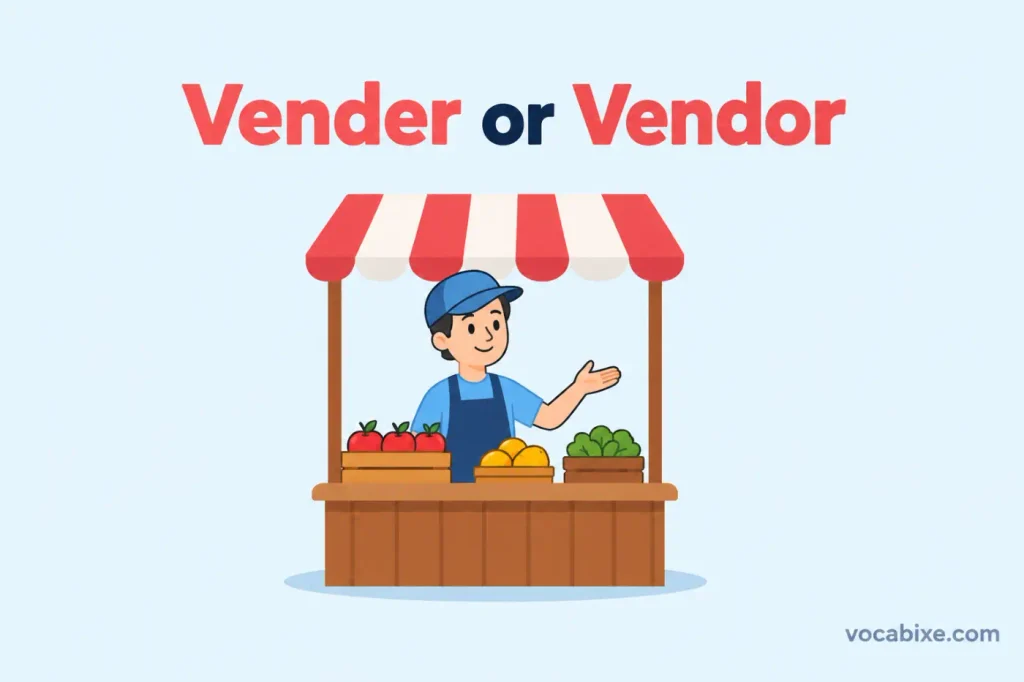
If you are wondering about vender or vendor, the standard spelling in modern English is vendor. A vendor is a person or business that sells goods or services. Vender is also a recognized English variant with the same basic meaning, but it is much less common.
This spelling can be confusing because vender looks natural. The verb vend means “to sell,” so it may seem logical to add -er and write vender. However, the established and widely preferred noun is vendor.
If you are writing an email, school assignment, business document, website, report, or professional message, choose vendor. It is the spelling most English readers expect.
Simple Answer in One Look
Vendor is the standard and widely used spelling. Vender is a real but uncommon variant meaning a seller.
| Word | Is it a word? | How common is it? | Best choice in modern writing? |
|---|---|---|---|
| Vendor | Yes | Very common | Yes |
| Vender | Yes | Uncommon | Usually no |
So, if you need the safest answer to “vender or vendor?”, use vendor.
What Does Vendor Mean?
A vendor is a person or business that sells something.
In simple English:
Vendor = a seller or commercial provider.
A vendor can sell physical products, such as food, clothes, or electronics. A vendor can also provide a service, software, equipment, or another product to a person or company.
For example:
The vendor sells fresh fruit at the market.
Here, vendor means a person who sells fruit.
The word is also very common in business English:
Our company selected a new software vendor.
In this sentence, the vendor is a company that provides software.
You may see vendor in many areas, including:
- Business
- Technology
- Retail
- Food markets
- Events
- Real estate
- Online shopping
- Professional services
The exact meaning depends on the situation, but the main idea stays the same: a vendor sells or provides something.
What Does Vender Mean?
Vender means a seller. It is a recognized English variant of vendor, but it is uncommon in modern usage.
This is an important point because it is tempting to say that vender is simply wrong. That is not the most accurate explanation.
The word exists, but modern English strongly favors vendor.
You may occasionally find vender in dictionaries, older writing, or less common usage. Most readers today, however, are much more familiar with vendor.
For example:
The vendor delivered the equipment on Monday.
This is the normal modern form.
You may see the same basic meaning written with vender, but it will look unusual to many readers.
What Is the Correct Spelling: Vender or Vendor?
The standard spelling is vendor.
Here is the simple comparison:
| Spelling | Meaning | Modern usage |
|---|---|---|
| Vendor | A person or business that sells goods or services | Standard and common |
| Vender | A seller | Recognized but uncommon |
For normal modern English, vendor is the spelling to choose.
Examples:
The company hired a new vendor.
We need to contact the vendor.
Several vendors submitted their prices.
The software vendor released a new update.
A local food vendor opened a new stand.
These sentences all use the spelling most readers expect.
What Is the Difference Between Vender and Vendor?
The main difference is usage and frequency, not basic meaning.
Both words can refer to a seller. The important difference is that vendor is the standard form used much more often in modern English.
| Feature | Vendor | Vender |
|---|---|---|
| Basic meaning | Seller or provider | Seller |
| Standard modern spelling | Yes | No |
| Common in modern English | Yes | No |
| Business writing | Recommended | Usually avoid |
| Everyday writing | Common | Uncommon |
| Technology | Very common | Rare |
| Professional documents | Preferred | Unusual |
This means you do not need to learn two completely different meanings.
Instead, remember the usage difference:
Vendor is standard. Vender is uncommon.
Is Vender Actually a Word?
Yes. Vender is a real English word.
It can mean a person who sells something. It is a variant of vendor, not a completely unrelated word.
However, being a recognized word does not mean that it is equally common.
English has many words and spellings that exist but are rarely used. In this case, vendor is overwhelmingly more familiar in modern business and everyday English.
So these two statements should be separated:
“Vender is a word.”
Yes.
“Vender is the spelling I should normally use.”
Usually no.
For most modern writing, choose vendor.
Why Do People Spell Vendor as Vender?
The confusion is easy to understand.
The verb vend means “to sell.” English also has many nouns ending in -er that describe a person who performs an action.
For example:
- teach → teacher
- drive → driver
- write → writer
- work → worker
- sing → singer
Because of this pattern, someone may naturally think:
vend + er = vender
That looks reasonable.
But English does not always form nouns in the same way. The established noun is vendor.
So the easiest approach is not to try to create the word from the verb each time. Simply remember the standard spelling:
vend → vendor
Which One Should You Use?
Use vendor when you mean a person or business that sells goods or services.
A simple rule is:
If you are writing modern English, choose vendor.
Use vendor in phrases such as:
- software vendor
- food vendor
- street vendor
- technology vendor
- clothing vendor
- approved vendor
- vendor agreement
- vendor contract
- vendor payment
- vendor support
You may find vender in some sources, but it is not the spelling most readers expect.
Easy Examples in Real Sentences
Here are simple examples using vendor.
- The vendor sold fresh fruit at the market.
- Our company chose a new software vendor.
- The food vendor opened a small stand near the park.
- Please contact the vendor about your order.
- Several vendors attended the business event.
- The school bought computers from a local vendor.
- We compared prices before choosing a vendor.
- The vendor offered free delivery.
- The street vendor sold cold drinks.
- The company works with several technology vendors.
These examples show that vendor can describe both individual sellers and businesses.
Common Mistakes to Avoid
Mistake 1: Writing “software vender”
Less common:
The company changed its software vender.
Better:
The company changed its software vendor.
Vendor is the normal spelling in technology and business writing.
Mistake 2: Assuming vend must become vender
It may look logical to write vender because the verb is vend.
However, the standard noun is:
vendor
Mistake 3: Saying that vender is never a word
This is too strong.
Vender is a recognized variant. It simply is not common compared with vendor.
Mistake 4: Writing “venders” when you mean vendors
The normal plural of vendor is:
vendors
For example:
The company contacted three vendors.
Mistake 5: Switching between the two spellings
If you are writing a document, do not randomly switch between vendor and vender.
For modern writing, use vendor consistently.
Where Does the Word Vendor Come From?
The word vendor is connected to the Latin verb vendere, meaning “to sell.”
English developed vendor as a noun for someone who sells something.
The history helps explain why the established spelling is vendor, even though vender may seem like a natural spelling based on the verb vend.
You do not need to memorize the full history to use the word correctly.
The practical rule is simple:
Vendor is the standard modern noun for a seller.
Vender or Vendor: Quick Comparison
Here is the complete answer in one table:
| Question | Vendor | Vender |
|---|---|---|
| Does it exist in English? | Yes | Yes |
| Basic meaning | Seller/provider | Seller |
| Is it standard? | Yes | No |
| Is it common? | Very common | Uncommon |
| Good choice for business writing? | Yes | Usually no |
| Common in technology? | Yes | Rare |
| Used in American English? | Yes | Uncommon |
| Used in British English? | Yes | Rare |
| Recommended for learners? | Yes | No |
The table shows why vendor is the clear winner for normal modern writing.
How Is Vendor Used in Real Life?
The word vendor appears in many real-life situations.
It can refer to someone selling products directly to customers. It can also refer to a company that provides products or services to another business.
This makes the word especially useful in professional English.
How Is Vendor Used in Business?
Businesses often buy products and services from other businesses. Those outside businesses can be called vendors.
For example:
The company has five approved vendors.
This means five sellers or service providers have been approved by the company.
You may also see these phrases:
- vendor agreement
- vendor contract
- vendor payment
- vendor invoice
- vendor management
- vendor selection
- vendor information
- vendor support
- vendor account
- approved vendor
These expressions are common in professional communication.
What Is a Software Vendor?
A software vendor is a person or company that sells or provides software.
For example:
The company changed its software vendor.
This means the company changed the business providing its software.
Other common expressions include:
- software vendor
- cloud vendor
- technology vendor
- security vendor
- hardware vendor
- service vendor
The word vendor is especially common in technology because companies often purchase software and services from outside providers.
What Is a Food Vendor?
A food vendor is a person or business that sells food.
For example:
A food vendor was selling sandwiches outside the stadium.
A food vendor might work from:
- A food truck
- A small stand
- A market stall
- An event booth
- A temporary shop
The word simply identifies the seller.
What Is a Street Vendor?
A street vendor sells products or food in a public place.
For example:
The street vendor sold drinks near the station.
Street vendors may sell many things, including food, drinks, clothing, flowers, or small goods.
Is Vendor Used in Real Estate?
Yes.
In some contexts, especially British English, vendor can mean the person selling a property.
For example:
The vendor accepted the buyer’s offer.
Here, the vendor is the person selling the property.
The buyer is the person purchasing it.
This shows why context matters when learning vocabulary.
Vendor vs Seller: What Is the Difference?
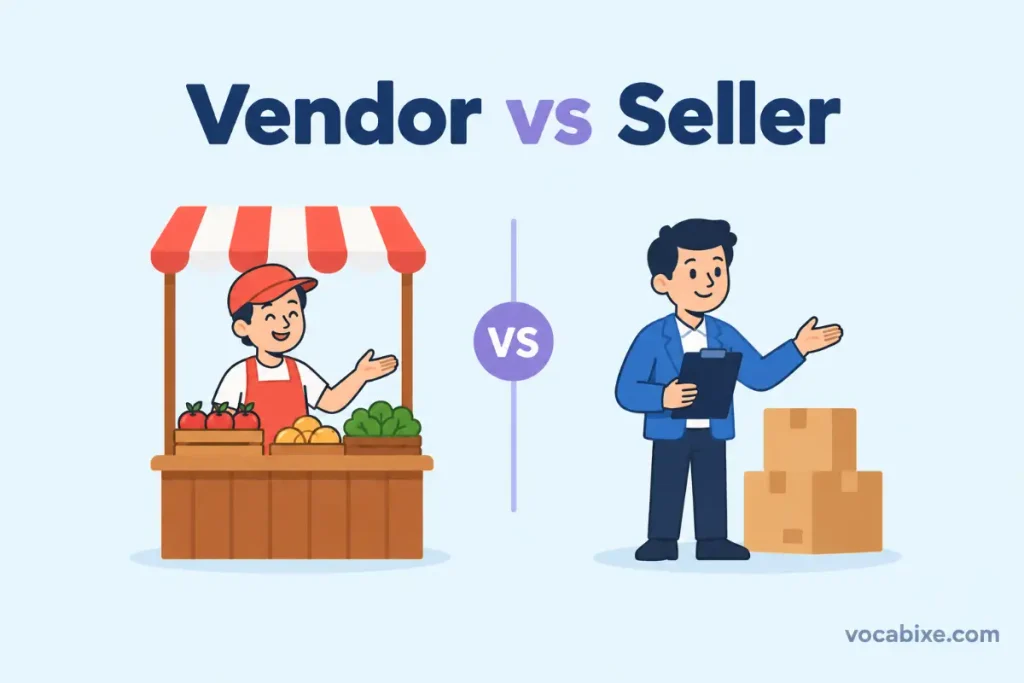
Seller and vendor can both describe someone who sells something.
The main difference is how they are commonly used.
Seller is a very general word.
Vendor is especially common in commercial, business, and professional contexts.
Compare:
The seller agreed to sell the car.
This sounds natural in everyday conversation.
Now compare:
The company selected a new software vendor.
Here, vendor is much more natural than software seller.
| Word | Simple meaning | Common context |
|---|---|---|
| Vendor | Person or business selling goods/services | Business and commercial English |
| Seller | Person who sells something | General everyday English |
The two words overlap, but they are not always the best replacement for each other.
Vendor vs Supplier: What Is the Difference?
A supplier usually focuses on providing goods, materials, or services to another business.
A vendor can also provide these things, but the word is broader.
For example:
The restaurant found a new food supplier.
The supplier may provide ingredients to the restaurant.
You could also say:
The restaurant works with several vendors.
Those vendors might provide food, equipment, software, cleaning services, or other products.
| Word | Main idea |
|---|---|
| Vendor | Seller or commercial provider |
| Supplier | Business providing goods or services, often to another business |
There is a lot of overlap between these words.
Vendor vs Retailer: What Is the Difference?
A retailer is a business that sells products directly to customers.
A vendor is a broader term for a seller or commercial provider.
For example, a clothing store can be a retailer.
A company supplying clothing to that store could also be described as a vendor or supplier, depending on the situation.
So:
Retailer focuses on selling directly to consumers.
Vendor focuses more broadly on selling or providing something.
Vendor vs Merchant: What Is the Difference?
A merchant is a person or business involved in buying and selling goods.
The word can sound more traditional or formal than vendor.
A vendor usually refers more directly to a seller or provider.
For example:
The merchant traded goods across the region.
This sounds more traditional.
The vendor supplied equipment to the company.
This sounds more modern and business-focused.
The words overlap, but their typical contexts can differ.
How Do You Pronounce Vendor?
Vendor is commonly pronounced approximately:
VEN-der
The first part sounds like ven, followed by a relaxed der sound.
The similar pronunciation of vendor and vender is one reason the spelling can be confusing.
When you hear the word, you may not know which spelling the speaker has in mind. When you write it, remember the standard form:
vendor
Is Vendor American or British English?
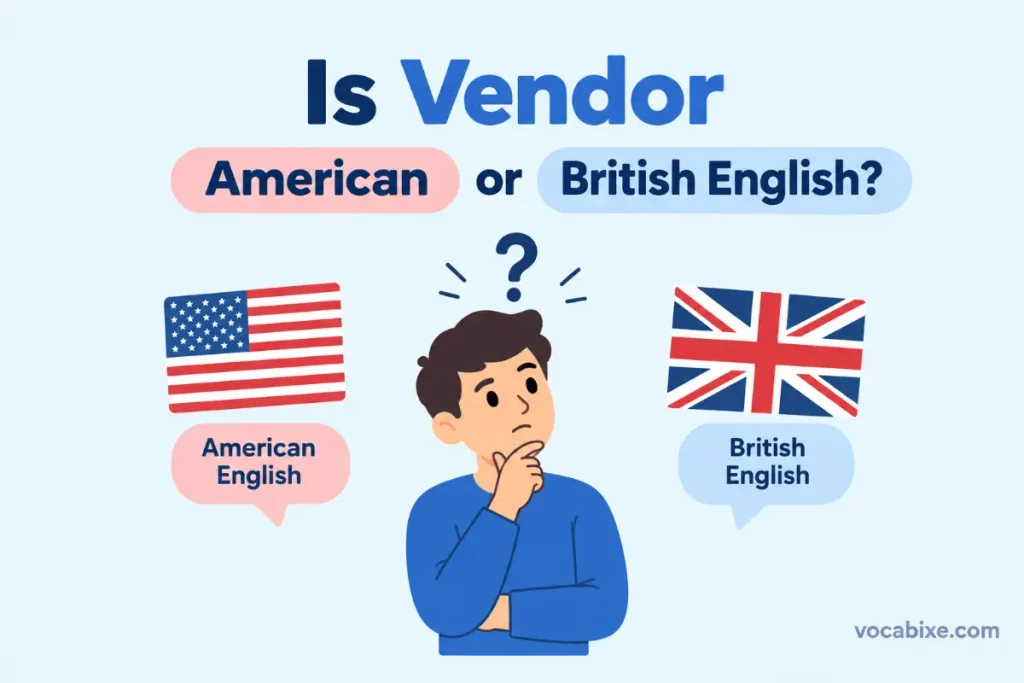
Vendor is used in both American and British English.
It is not a case where Americans use vendor and British speakers use a completely different spelling.
Both varieties of English use vendor.
For example:
software vendor
food vendor
street vendor
technology vendor
There can be differences in the situations where a word is especially common, but the spelling vendor is established in both forms of English.
What Is the Plural of Vendor?
The plural of vendor is:
vendors
You simply add -s.
Examples:
The market has several vendors.
We contacted three vendors.
The company works with many vendors.
If you are using the standard spelling, do not write venders.
What Is Vendor’s?
Vendor’s is the possessive form for one vendor.
For example:
The vendor’s contract expires next month.
This means the contract belongs to one vendor or is connected with that vendor.
What Is Vendors’?
Vendors’ is the possessive form for more than one vendor.
For example:
The vendors’ contracts were reviewed.
This means the contracts belong to multiple vendors.
These small grammar differences are useful when writing business documents.
How Can I Remember Vendor?
Use one simple memory trick:
A vendor sells.
You can also remember:
vend → vendor
When you see the verb vend, connect it with the standard noun vendor.
You do not need to invent a spelling from the verb.
Just remember:
V-E-N-D-O-R
Real-Life Usage Examples
Here are more examples from different situations.
The hotel hired a local food vendor for the event.
We need to review the vendor’s contract.
The technology vendor released a security update.
Several vendors offered different prices.
The store found a cheaper clothing vendor.
The event manager contacted every vendor.
Our vendor delivered the equipment on time.
The company wants to reduce the number of outside vendors.
The vendor provides customer support after installation.
The market attracts vendors from nearby towns.
The school is looking for a reliable computer vendor.
The business signed a new vendor agreement.
These examples show why vendor is common in both everyday and professional English.
Related Words You Should Know
Learning a few related words can make the meaning of vendor easier to understand.
Seller
A person who sells something.
The seller accepted the offer.
Supplier
A person or business that provides goods or services, often to another business.
The restaurant changed its food supplier.
Retailer
A business that sells goods directly to customers.
The retailer opened a new store.
Wholesaler
A business that sells goods in large quantities, often to retailers.
The retailer buys products from a wholesaler.
Merchant
A person or business involved in trade.
The merchant sold goods at the market.
Dealer
A person or business that sells particular products.
The car dealer showed us several vehicles.
Provider
A person or business that provides a service or product.
We chose a new internet provider.
These words are related, but they are not always interchangeable. The best word depends on the exact situation.
Common Questions About Vender and Vendor
Is vendor always the correct spelling?
For normal modern English, vendor is the standard choice. Vender is recognized as a variant, but it is uncommon.
Is vender completely wrong?
No. It is more accurate to call vender an uncommon variant rather than simply saying it is not a word.
Should I use vender in an essay?
It is better to use vendor. This is especially true if your essay is for school, university, work, or another formal setting.
Should I use vendor in business writing?
Yes. Vendor is the normal choice in business writing.
Is software vendor correct?
Yes. Software vendor is a common phrase for a company that sells or provides software.
Is food vendor correct?
Yes. A food vendor is a person or business that sells food.
Is street vendor correct?
Yes. A street vendor sells goods or food in a public place.
Is vender used in American English?
Vender can be found in American English as an uncommon variant, but vendor is much more common.
Is vendor used in British English?
Yes. Vendor is also used in British English.
What is the plural of vender?
If you encounter the uncommon noun vender, its plural can be venders. However, modern writing normally uses vendor → vendors.
What is the plural of vendor?
The standard plural is vendors.
What is the difference between a vendor and a supplier?
A vendor is a seller or commercial provider. A supplier often emphasizes providing goods or services to another business. The terms can overlap.
Final Teacher Explanation
Think of vendor as the normal modern word for a seller or commercial provider.
If someone sells food at a market, that person can be a vendor &If a company provides software to another company, it can be a software vendor & If a business supplies equipment, it may also be called a vendor.
The spelling vender can be confusing because it looks like a natural form of the verb vend. It is also a real English variant. However, it is much less common.
So there is no need to make the answer more complicated than it needs to be:
Vendor is the standard spelling. Vender is an uncommon variant.
Final Answer — Quick Recap
Vendor is the standard and widely used spelling for a person or business that sells goods or services. Vender is also a recognized English variant, but it is much less common.
For school assignments, professional documents, business emails, websites, reports, and everyday writing, choose vendor. The easiest rule is:
Vendor is standard; vender is uncommon.
You may see both spellings in English sources, but they are not equally common. Modern English strongly favors vendor, especially in business, technology, retail, and professional communication.
If you are unsure which spelling to use, choose vendor. It is the form your readers are most likely to expect.
FAQs
Is vender or vendor correct?
Vendor is the standard and much more common spelling. Vender is a recognized but uncommon variant.
Is vender a real word?
Yes. Vender is a real English noun meaning a seller, but vendor is the normal modern form.
Is vender a misspelling?
Not necessarily. It is a recognized variant, but it is much less common than vendor.
What does vendor mean?
A vendor is a person or business that sells goods or services.
What does vender mean?
Vender means a seller. It is an uncommon variant of vendor.
Should I use vendor or vender?
Use vendor in normal modern English. It is the standard and widely preferred spelling.
Is vendor American or British?
Vendor is used in both American and British English.
What is the plural of vendor?
The plural is vendors.
What is the difference between vendor and seller?
Both can mean someone who sells something. Seller is more general, while vendor is especially common in commercial and business contexts.
What is the difference between vendor and supplier?
Both can describe businesses that provide products or services. Supplier often focuses on providing goods or services to another business, while vendor is a broader commercial term.
How do you pronounce vendor?
Vendor is commonly pronounced approximately VEN-der.
Conclusion
When choosing between vender or vendor, use vendor in almost all normal modern writing. It is the standard spelling and is widely used in everyday English, business, technology, retail, and professional communication.
The spelling vender deserves one important clarification. It is not simply a meaningless spelling mistake. It is a recognized but uncommon variant that can mean the same thing as vendor. Still, vendor is the better choice when you want your writing to sound natural and familiar to modern English readers.
The easiest rule to remember is simple:
A vendor is a seller, and vendor is the spelling you should normally use.
Pingback: Humorous vs Humerous: Correct Spelling, Meaning, and Usage - Vocabixe
Pingback: Dealt or Delt: Correct Spelling Explained 2026 - Vocabixe
Pingback: 22th or 22nd? The Correct Spelling Explained 2026 - Vocabixe